

If you're approaching your 40s or 50s and noticing changes in your strength, body composition, or recovery, you're not imagining that this stage of life can feel different.
During perimenopause, fluctuating estrogen levels and age-related changes can influence body composition, sleep, recovery, and musculoskeletal health.
But here's what I want women to understand: perimenopause does not mean you're destined to lose muscle, become weaker, or give up on making progress in the gym.
You can build muscle during perimenopause. You just need a training and nutrition strategy that supports the goal instead of relying on endless cardio, random workouts, and increasingly complicated wellness routines.
1. Lift weights that actually challenge you
One of the most common mistakes I see in women's fitness is doing too much exercise without enough meaningful resistance.
If you're using the same light dumbbells for every workout, performing endless repetitions, or choosing weights that never feel challenging, you may not be giving your muscles a sufficient stimulus to grow.
Muscle hypertrophy requires progressively challenging your muscles over time.
That means gradually increasing the weight, repetitions, sets, or difficulty of an exercise as your capacity improves.
Focus on foundational movements such as:
Squats and lunges
Hip hinges and Romanian deadlifts
Rows and pulldowns
Chest presses and push-ups
Overhead presses
Loaded carries
You don't need to lift the heaviest weights in the gym. You need a manageable program that challenges you consistently with good technique.
2. Prioritize progressive overload over workout volume
More exercise isn't automatically better.
Four well-designed strength sessions can be more productive than six workouts filled with redundant exercises that leave you exhausted without providing a clear progression strategy.
Start with a manageable training volume, often around two to four working sets per exercise, and use a repetition range that allows you to maintain good technique while making the final repetitions challenging.
For many exercises, sets of roughly 6–15 repetitions are a practical starting point for building muscle.
Most working sets should finish with approximately 1–3 good repetitions still possible. You don't need to reach complete muscular failure on every set.
Track your workouts so you can see whether your strength is improving. If your training never progresses, your results may eventually stall.
3. Eat enough protein and total calories
You cannot consistently build muscle without providing your body with adequate energy and the raw materials needed to repair and build tissue.
For healthy adults who strength train, approximately 1.4–2.0 grams of protein per kilogram of body weight daily is a reasonable evidence-based range to consider.
For a woman weighing 150 pounds, that works out to roughly 95–136 grams per day.
You can distribute protein across meals rather than trying to consume most of it at dinner.
Useful options include eggs, Greek yogurt, fish, chicken, tofu, beans, and other protein-rich foods that fit your preferences.
Total calorie intake matters, too. An aggressive calorie deficit can make muscle growth more difficult, especially when paired with high training volume and inadequate recovery.
You don't automatically need to bulk. You do need to eat enough to support your training and goals.
4. Stop treating cardio like the enemy, but stop making it the entire plan
Cardiovascular exercise supports heart health, fitness, and overall well-being. It belongs in a balanced exercise routine.
The problem is relying on cardio alone while neglecting progressive resistance training.
During perimenopause, maintaining muscle and supporting bone health become particularly important priorities. Strength training provides a valuable stimulus for both muscle development and skeletal health, although bone outcomes depend on the type of loading, individual risk factors, and other lifestyle considerations.
A practical starting point is two to four strength sessions per week, alongside regular walking and cardiovascular activity appropriate for your fitness level.
You don't need to choose between being strong and having good cardiovascular fitness. Your program should support both.
5. Treat recovery as part of the program
Perimenopause can bring sleep disruption, night sweats, and changes in how you feel from one day to the next.
Poor recovery can make training harder to sustain.
Prioritize adequate sleep, sufficient food, rest between demanding sessions, and gradual progression. If symptoms are significantly affecting your sleep or quality of life, discuss appropriate treatment options with your healthcare provider.
You don't need to punish yourself through exhaustion to prove you're working hard enough.
6. Stop blaming every change on your hormones
Hormonal changes can influence your body, but they don't eliminate the benefits of strength training.
If your workouts aren't producing results, consider the basics first: Is your training progressive? Are you eating enough protein? Are you recovering adequately? Is your program consistent enough to evaluate?
Persistent fatigue, unexpected changes in strength, or other concerning symptoms deserve appropriate medical evaluation rather than being automatically attributed to perimenopause.
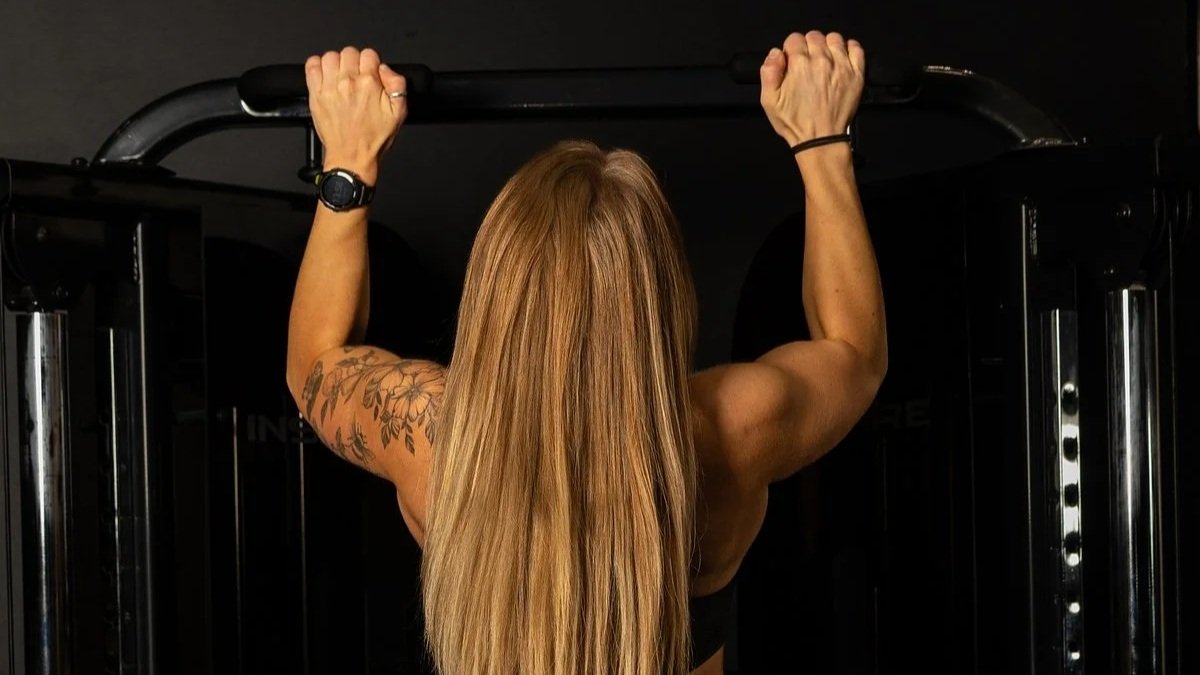
Build strength for the next 30 years, not just the next 30 days
Strength training can help women build muscle, maintain physical function, support bone health, and feel more capable as they age.
But the best program isn't the most complicated one. It's the one that challenges you appropriately, supports recovery, and fits your life well enough to sustain.
At Rachel Claire Functional Health, I help women develop personalized strength-training and lifestyle strategies that support their goals through perimenopause and beyond.
Ready to get stronger without wasting time on workouts that aren't moving you forward? Explore my women's exercise programming and personal training and take the next step toward building a stronger, more capable body.

