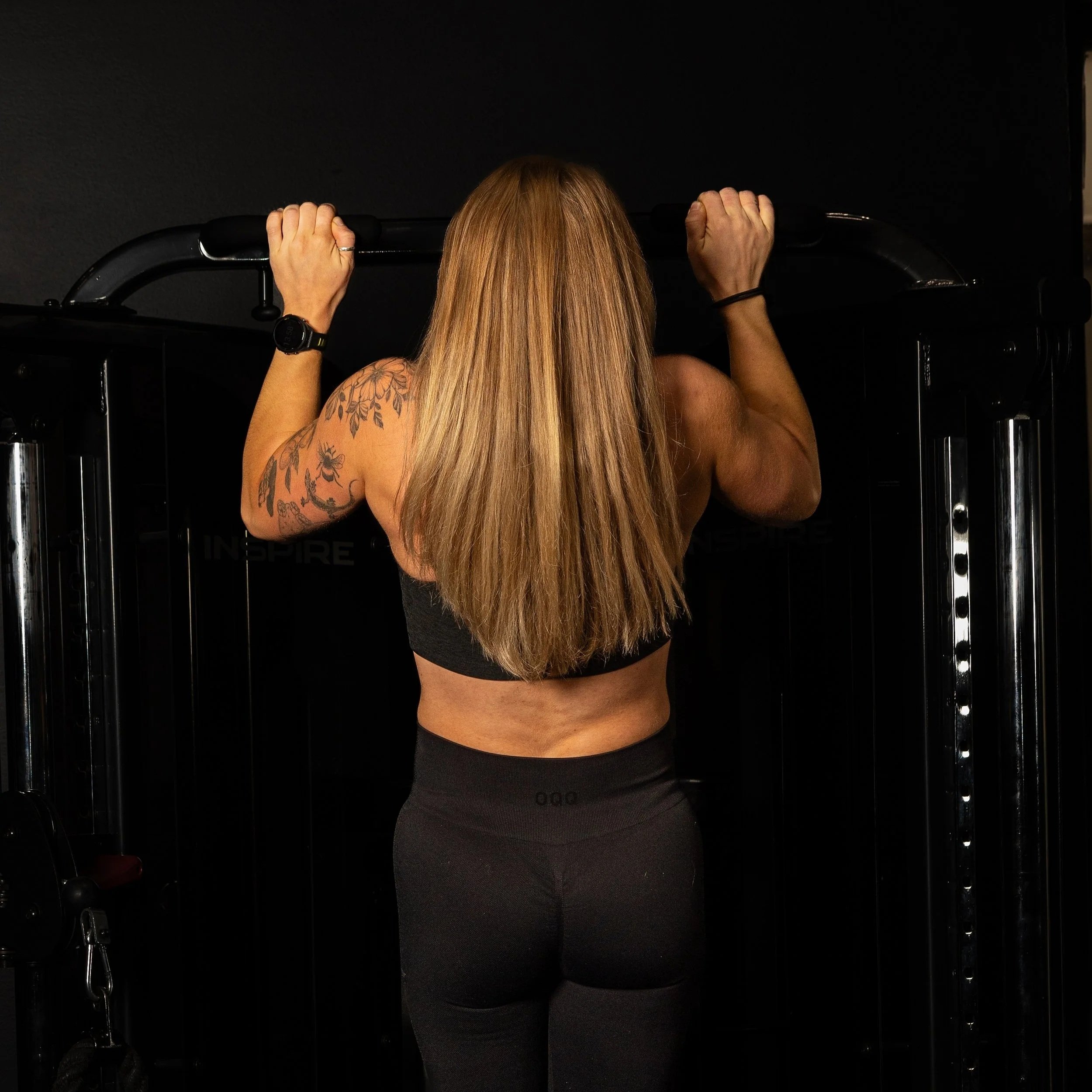
Why Lifting Too Light Is Holding Many Women Back in the Gym
Walk into most gyms and you’ll notice a pattern.
Many women gravitate toward lighter weights and higher repetitions. Meanwhile, the heavier dumbbells and barbells are often left untouched.
This isn’t because women aren’t capable of lifting heavier weights. In most cases, it’s because of outdated fitness advice and lingering myths about strength training.
One of the most common mistakes I see in women’s training programs is too much volume with weights that are too light to actually challenge the body.
The Misunderstanding About “Toning”
Many women have been taught that the goal of training should be to “tone” muscles rather than build them.
But physiologically speaking, muscle tone is simply the result of muscle development combined with lower body fat levels.
The body needs a stimulus to build and maintain muscle tissue. That stimulus typically comes from lifting weights that are challenging enough to recruit muscle fibers effectively.
When weights are too light, the body has very little reason to adapt.
Why Progressive Overload Matters
Strength training works because of a concept called progressive overload.
This simply means gradually increasing the demand placed on the muscles over time.
This can be done by:
Increasing weight
Increasing repetitions
Increasing sets
Improving form or time under tension
If workouts never become more challenging, the body eventually stops adapting.
Many women end up doing the same workouts with the same weights for months or even years, wondering why their strength or body composition hasn’t changed.
The Muscle-Building Stimulus
For muscles to grow stronger, the body needs to recruit higher-threshold muscle fibers.
These fibers are activated when resistance becomes more demanding.
Lifting heavier weights doesn’t mean maxing out every workout or training unsafely. It simply means working within a weight range that feels challenging by the final repetitions of a set.
A helpful guideline is that the last few reps should feel difficult while still maintaining proper form.
If you finish a set and feel like you could easily do another 10 repetitions, the weight is likely too light to stimulate meaningful progress.
Why This Matters for Women’s Health
Strength training has benefits that go far beyond aesthetics.
Building muscle can help support:
Metabolic health
Bone density
Blood sugar regulation
Injury prevention
Long-term mobility
For women, especially as they age, muscle mass becomes increasingly important for maintaining independence, strength, and metabolic resilience.
Lifting heavier weights (safely and progressively) is one of the most effective ways to support these outcomes.
The Fear of “Bulking Up”
One of the biggest barriers preventing women from lifting heavier is the fear of becoming bulky.
In reality, building significant muscle mass requires:
Years of focused training
High calorie intake
Favorable genetics
Most women simply do not produce the levels of testosterone required to gain large amounts of muscle easily.
Instead, lifting heavier weights typically leads to increased strength, improved muscle definition, and a healthier metabolism.
The Bottom Line
If your workouts feel easy week after week, your body has likely adapted.
Strength training should challenge the muscles enough to encourage growth and adaptation.
Rather than focusing on endless repetitions with light weights, women often benefit from gradually increasing resistance and prioritizing strength.
The goal isn’t just to sweat.
The goal is to build a stronger, more resilient body.